
Bletsoe Castle was a medieval fortified house, in the village of Bletsoe, north-west of Bedford, Bedfordshire. It has been much adapted over the years, and is now a private house.
History
The manor of Blestoe had existed since the Anglo-Saxon period, but there is no evidence of a local castle being constructed after the Norman conquest of 1066. There was a manor house, positioned on high ground to the east side of the village, near to the village church.
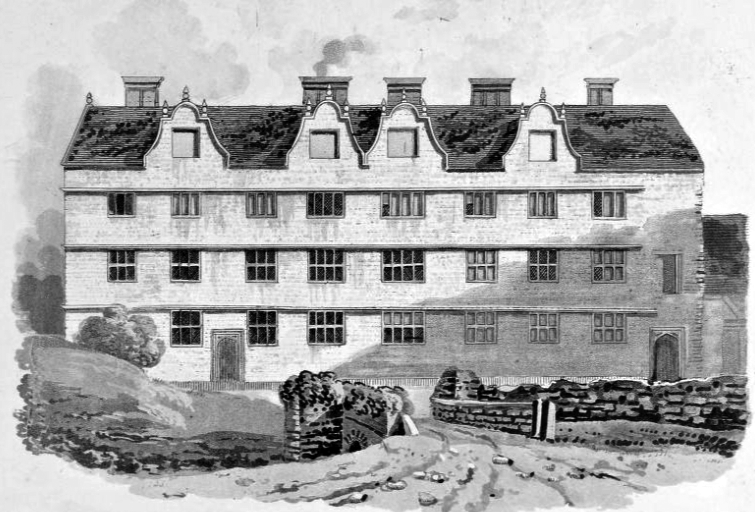
Bletsoe Castle was created by John Pateshull, who received a License to Crenellate the existing manor house in 1327. Pateshull had owned the manor of Blestoe since 1313, but it was only in 1324 that he inherited the additional lands which enabled him to acquire the royal permission to fortify the property. As part of this work, Pateshull built a wet moat around his new house.
In 1421, the castle passed to Margaret Beauchamp who married first Sir Oliver St John, and then John Beaufort, the Duke of Somerset. Their daughter, Margaret Beaufort, who would become the mother of Henry VII, was born in the house in 1443. The castle was inherited by Oliver St John’s family line.

In the late 16th century, the castle was converted into a larger, contemporary high-status dwelling. The new building, which enclosed the old medieval fortification, was three storeys high with and additional line of the gable windows characteristic of the period. A stone bridge was constructed across the moat. It may have had other wings attached to the main building or a gatehouse near the bridge. Queen Elizabeth I reportedly stayed in the house for one evening.
In the early, 17th century, formal Jacobean gardens were built to the north-west the house, replacing some of the existing agricultural land and incorporating the medieval moat. James I visited the house six times.
By the 19th century, Bletsoe Castle had fallen out of fashion and from 1813 it was used as a farmhouse. The Elizabethan interior was gutted and the upper storey of the house was pulled down, leaving a much smaller building, albeit still incorporating the medieval castle at its core and the surrounding moat.
Today the castle is protected under UK law as a Scheduled Monument and a Grade 2* Listed Building. The farmhouse is now a private dwelling.